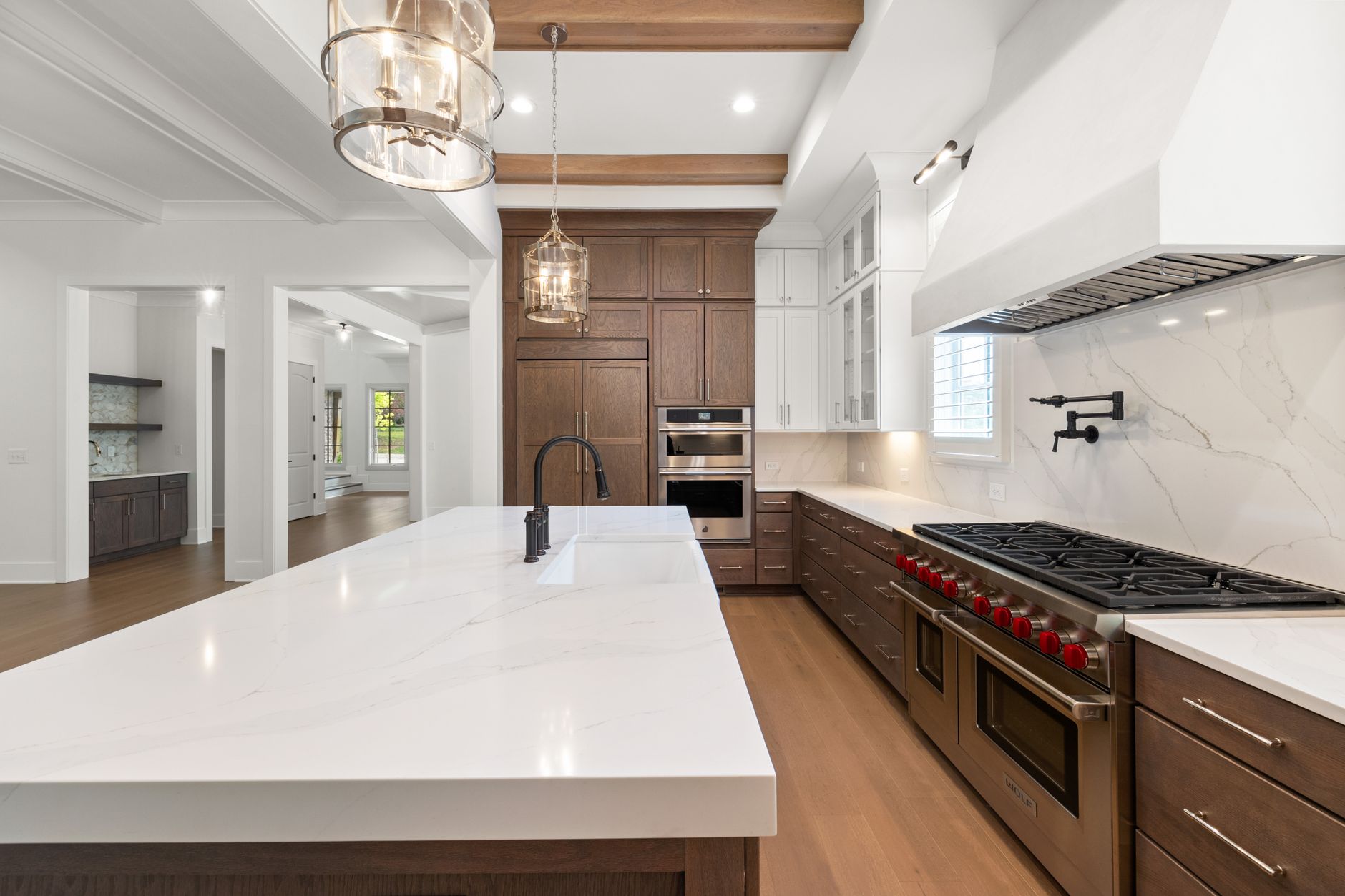
Quartz Countertops in Austin, TX
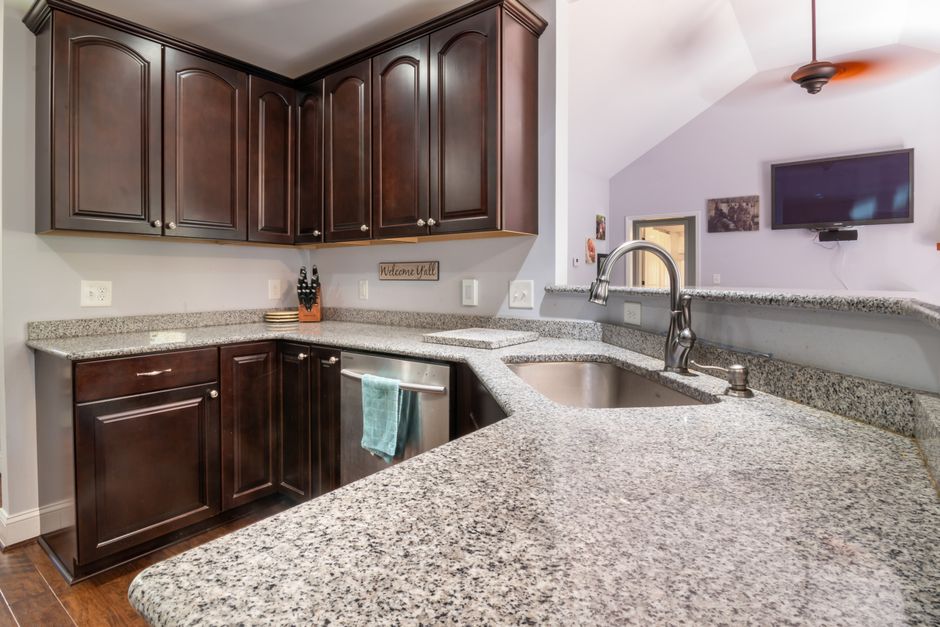
Notes on engineered quartz countertops in Austin, TX, covering heat limits, Texas sun, seams on large islands and how edges, sinks and backsplashes are fitted.
What We Cover
- Quartz and Hot Pans in an Austin Kitchen Why resin in engineered quartz limits heat resistance, and how trivets protect a counter next to the range.
- Seams on a Large Quartz Island Where seams go on a big island, how slab length decides it, and how a fabricator makes a joint hard to see.
- Undermount Sinks and Backsplash with Quartz How an undermount sink is bonded to a quartz top, how cutouts are supported, and how a backsplash meets the counter.
- UV Fading on Quartz Near Sunny Austin Windows What strong Texas sun through glass does to the resin in quartz, and which spots in a house are most at risk.
- Waterfall Edges and Edge Profiles on Quartz How a waterfall edge, eased edge and mitered edge are cut and joined on a quartz slab, and how each wears.
- What Engineered Quartz Is Made Of How crushed quartz and resin are pressed into an engineered quartz slab, and what that mix means for a kitchen counter.
Quartz Countertops in Austin, TX
Engineered quartz is a slab of crushed stone bound with resin, and in Austin, TX it is the surface most often chosen for a family kitchen. It does not need sealer, it shrugs off wine and coffee, and the pattern is consistent from one sheet to the next. A crew that installs it learns quickly where it behaves and where it does not.
What the resin changes
The resin is the reason for every limit. Heat from a pan beside the range can scorch it, and months of sun through a west window can shift the color. Those two facts shape layout choices in houses from Hyde Park to Travis Heights, where kitchens often face a yard or a porch and a stovetop gets hard use through a long summer.
Islands, seams and edges
A large island usually outruns one slab, so the seam, its position over the cabinets and the match of the veining are settled at templating. A waterfall edge or an undermount sink adds more cuts and joints to plan. Older homes in Clarksville and Tarrytown add walls that are not square and floors that slope toward the old chimney.
Outdoor-adjacent kitchens
Kitchens that open to a patio near Zilker Park or Lady Bird Lake get more light and more temperature swing than an interior room. Quartz belongs indoors, and a counter just inside a glass door is a different case from one set back near the pantry. Covered outdoor kitchens are usually better served by granite or porcelain.
Guides
The pages here cover what engineered quartz is made of, how it handles hot pans and Texas sun, where seams land on a long island, how waterfall edges and edge profiles are cut, and how undermount sinks and backsplashes are fitted. Posts take up shorter local questions as they come up.
Latest Guides
Matching a Countertop Surface to Each Part of an Austin House
Engineered quartz does not suit every counter in an Austin house equally. It excels where a surface needs to resist stains and ignore sealing, and it struggles where heat or sunlight is heavy. Walking through a house room by room shows where it belongs, and a short table makes the pattern easy to see.
Where does engineered quartz fit in a typical Austin house?
Location Main stress How engineered quartz copes Better alternative if it struggles Kitchen island away from glass Spills, daily wear Very well, no sealing needed Not needed Perimeter run beside the range Hot pans, oven heat Fair, trivets required Granite or quartzite Counter under a west window Direct afternoon sun Fair, pale colors can shift Darker slab, or granite Bathroom vanity Water, toothpaste, cosmetics Very well Not needed Laundry room top Detergent, folding wear Well Laminate for a plain top Covered patio bar Weather, sun, grill heat Poorly, made for indoor use Granite or porcelain slab Open outdoor kitchen Full sun, rain, temperature swings Not suitable Porcelain slab or granite The table is a starting point. A house's orientation, the age of the cabinets and the way a household cooks can shift any row.
Why does the kitchen island often suit quartz best?
An island sits in the middle of the room, usually away from windows and away from the range, so it avoids the two conditions quartz dislikes. It takes the most daily life, from homework to party platters, and it is the place where a surface that never needs sealing earns its reputation. Islands in newer homes around Mueller are often the longest single piece in the house, which makes seam placement the main design question rather than the material.
A good fabricator pulls matching slabs from one lot and lays them out before cutting. The seam goes over a solid cabinet rail, away from the sink cutout. An island with a waterfall edge adds two mitered corners that need a clean pattern match, and quartz handles that well because its pattern repeats from slab to slab.
What changes along the cooking wall?
The run beside the range is the hot zone. Resin softens before stone does, so a pan fresh off a burner can scorch a quartz surface. A trivet by the range solves it for most cooks. Households that sear steaks on cast iron every night, or run an oven for hours through a hot week, sometimes choose granite or quartzite for the cooking wall and keep quartz for the island.
The cutout for a cooktop is also the part of the slab under the most stress. Corners should be rounded, and the narrow strip at the front of the cutout needs to be wide enough to carry the load. A fabricator checks these on the template before the saw touches the slab.
How does sun through glass change the decision?
Austin gets long, strong summers, and glass lets the ultraviolet through. A white or cream quartz under an unshaded west window can take on a warm yellow cast over several years, and the change shows most where a toaster or a bowl once shaded the surface. Mid tones and patterned slabs hide it better. Blinds, a deep overhang outside or a tree that shades the glass in summer all reduce the effect.
Houses near Barton Springs Pool and along Bouldin Creek often have mature pecans and live oaks that shade the glass for much of the day, which helps. Newer builds on open lots in the Texas Hill Country edge have less shade and more glass, so the same slab behaves differently there.
What about bathrooms and laundry rooms?
A bathroom vanity is the easiest job for quartz. Water, soap, toothpaste and makeup all wipe off a closed surface, and an undermount sink gives a clean line with no rim to catch grime. The only caution is a hot curling iron or a flat iron left on the surface, which can scorch resin as readily as a pan. A heat mat under hair tools prevents it.
A laundry top takes detergent, bleach splashes and the wear of folding, and quartz handles all three with less fuss than laminate. A remnant from a larger job is often enough for a small laundry counter, and the leftover piece from a kitchen island can find a second use there.
How do older houses affect the choice?
Bungalows in Hyde Park, Tarrytown and Travis Heights have walls that lean, floors that slope and cabinets that have settled over the decades. Quartz is rigid and unforgiving, so it needs a level base. A crew that arrives to template after the cabinets are shimmed gets a better fit than one working from a drawing. The gap along the back wall is closed with a flexible caulk or hidden by a backsplash, and the counter edge may need scribing to follow the plaster.
Older kitchens are also smaller, so a single slab usually covers the whole run and no seam is needed. That is one more reason the material suits them, provided the range and window are placed with the same care as in a bigger room.
How does care differ from one spot to the next?
The island and the vanity need only soap and water. The cooking wall needs a trivet habit more than a cleaning routine. A sunny counter benefits from a shade pulled down at midday, and a patio-side counter needs the grit wiped off before anything is dragged across it. Harsh chemicals such as oven cleaner and paint stripper attack the resin anywhere in the house, so they stay away from every quartz surface.
Hard water leaves white rings around the sink and the faucet base. The water in Austin picks up mineral on its way through the limestone country on both sides of the Balcones Fault, and polished quartz shows the spots plainly. A damp cloth after each use prevents most of them.
What should be settled before the slab is cut?
Three things decide most of the outcome: where the sun lands, where the heat comes from and where the seam falls. A site visit answers the first two in minutes, and the template answers the third. A slab chosen without those answers is a slab chosen on color alone, and color is the least of what the counter has to survive.
Bring the questions to the fabricator early. Which way does the glass face? How far is the range from the nearest window? Does the island fit on one slab? A crew that has worked in the neighborhood knows the answers for most of the older streets and many of the newer subdivisions.
Is there a simple way to decide?
Ask what the surface will face most. If the answer is spills and stains, quartz is a strong match. If the answer is a hot pan or a full afternoon of sun, look at granite, quartzite or porcelain for that spot. Many Austin kitchens end up with two materials, and the line between them usually falls at the range.
Engineered quartz fits the parts of an Austin house that need an easy, stain-proof surface indoors. Keep it out of direct sun and away from the burners.
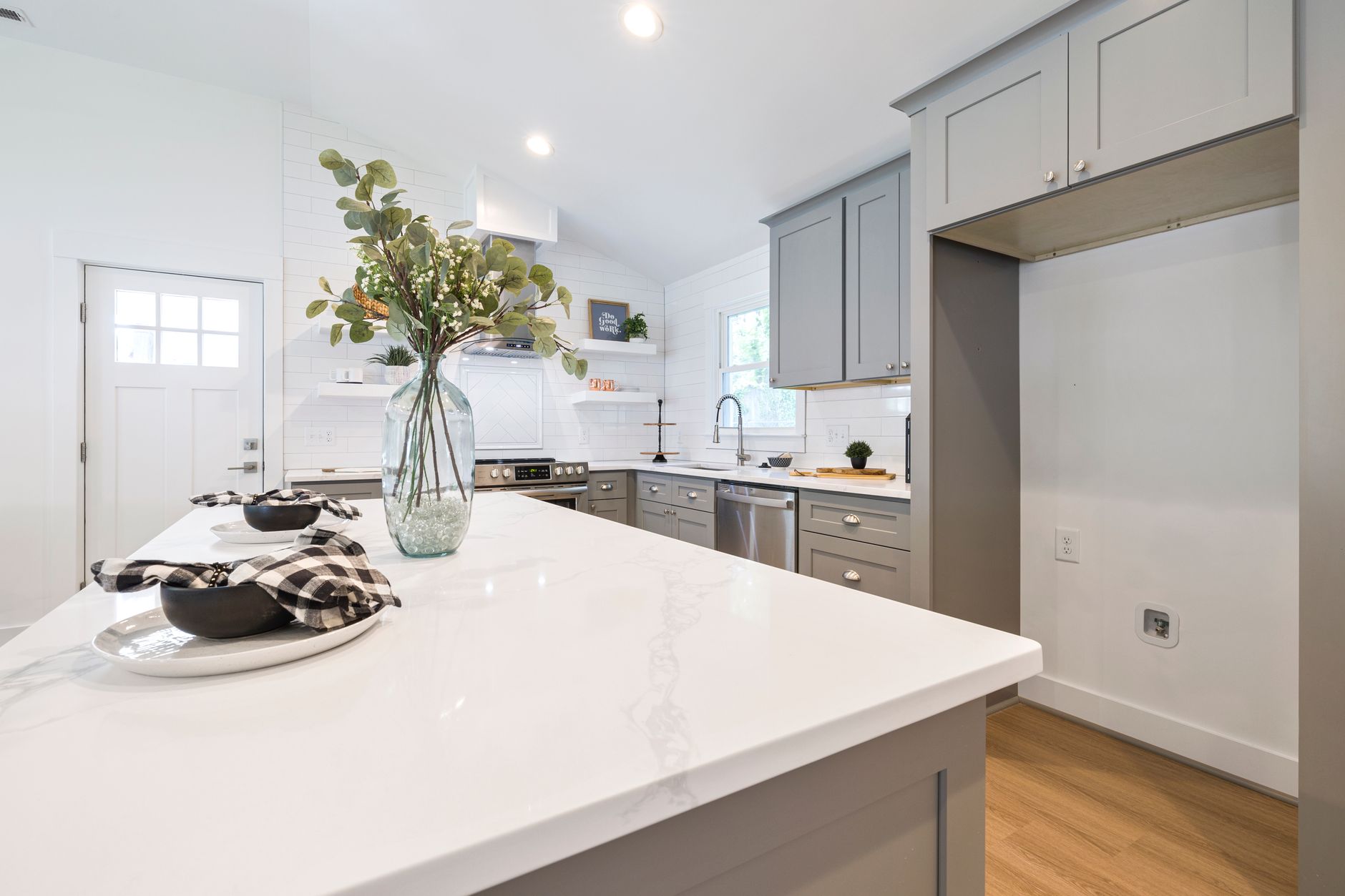
Questions About Quartz in an Austin Kitchen That Opens to the Patio
Quartz works well in most Austin kitchens, and the exceptions come down to two things: heat and direct sun. A kitchen that opens to a patio has more of both than an interior room, and the questions below are the ones that come up when engineered quartz meets a sliding door, a west window and a Texas summer.
Can engineered quartz be used on an outdoor kitchen counter?
Engineered quartz is made for indoor use. The resin that binds the crushed stone breaks down under open sun, and a counter left uncovered through an Austin summer will yellow, chalk and in some cases warp. A covered patio changes the exposure but not the heat, since a grill run puts hot trays and pans on the top. For an outdoor kitchen, granite, quartzite or porcelain slab are the usual choices, because none of them carries resin.
How close to a sliding glass door is too close?
There is no fixed distance, because it depends on which way the glass faces and how long the sun stays on the counter. West and south glass are the hard cases. A perimeter run that sits directly under a west window takes afternoon light at its lowest, most direct angle for months at a stretch. An island set back from the glass by the width of a walkway sees far less. The fabricator can read the orientation off the plan, and a visit at four in the afternoon in July shows what the room really does.
Does window tint or film actually help?
Tinted glass and window film block part of the ultraviolet light, and the better films block more of it. That slows the fade but does not stop it, and light still gets through at an angle around the edge of a film. Blinds or sheer shades on the worst window do more than any coating. A kitchen near Lady Bird Lake or on a hill above the Colorado River often has big glass to catch the view, and those are the rooms where shades earn their keep.
What happens when the patio door stays open in humid weather?
Quartz itself does not absorb moisture, so humidity does not mark the top. The cabinet boxes underneath are a different story. Particleboard sides near an open door can swell over a wet summer, and a swollen cabinet carries a level counter out of true. That can open a seam or put stress on a sink cutout. Sealed cabinet edges and a dehumidifier or air conditioning that stays running keep the boxes stable.
Can a hot cast iron pan or a grill tray go on the counter by the door?
Not directly. The resin in quartz scorches under a very hot pan, and a counter that already holds the warmth of a sunny afternoon has less margin. The ring from a pan base can be pale, yellow or cracked at the edge. A trivet or a thick board costs nothing and prevents it. Keep one beside the door, because that is where hot trays get set down by someone with both hands full.
Which colors show sun damage least?
Mid tones and busy patterns hide a small shift in color better than plain white or cream. A pale slab with no pattern shows a yellow cast fast, and a band of faded surface near a window reads clearly against the part that stayed in shade. A speckled gray or a soft beige with movement in the pattern gives the eye something else to look at. Dark colors tend to show dust and water marks more than fade.
How can a sample be tested before ordering?
A remnant or a large sample set on the sill for a few weeks tells something, though not the whole story. Cover half with a piece of card and compare after a month of sun. If the exposed half already looks different, that slab is a poor match for the wall. The test is crude, but it costs only patience, and a slab that shifts in a month is not going to hold in a decade.
What about hard water spots near the sink by the door?
Austin water carries a lot of dissolved mineral, a result of the limestone the aquifer runs through along and west of the Balcones Fault. On a polished quartz surface the spots show as a white ring where a glass or a drip dried. They wipe off with a damp cloth when fresh. Old rings need a mild descaler used per the maker's instructions, and a harsh abrasive pad dulls the polish, so it is better left in the cupboard.
Does a seam close to the door cause trouble?
A seam near a high traffic door is not a defect, but it deserves thought. A door that slams sends a small shock through the cabinet, and a seam over a weak support can open slightly over the years. The fix is to place the seam over a solid cabinet rail and keep it away from the door swing. The template gives the fabricator the information to do that before a single cut is made.
When is granite or porcelain the better call?
Granite and porcelain suit the patio side of a house, the covered bar and any counter that will see a hot pan or a day of direct sun. Quartz suits the interior, the island away from the glass and the bathroom vanity. Mixing them is common, and a kitchen with a granite run by the grill and quartz on the island is a sound plan.
Can a quartz window sill or backsplash take the sun as well?
A sill is the most exposed piece of quartz in a house, because it sits flat in the full light with nothing above it. A sill on a west window can show a yellow shift within a few summers, and a backsplash under a window shows the same band as the counter. Where a sill matters to the look, many installers cut it from a slightly darker slab or a different material, so a change in color does not run against the rest of the room.
How should a quartz counter by the door be cleaned?
Warm water and a mild dish soap clean it. Patio dust and pollen from live oak and cedar season wipe off with a damp microfiber cloth, and a flat plastic scraper lifts dried residue without marking the surface. Avoid oven cleaner, drain cleaner and paint stripper, which attack the resin and leave a dull patch. A kitchen that opens to the yard collects more grit than an interior one, and grit dragged under a pot is what leaves fine scratches.
What does a good installer check on site?
The crew checks which way the glass faces, how far the range sits from the door, whether the floor is level and where the seam will land over a cabinet rail. In older neighborhoods such as Hyde Park or Clarksville, the walls also get checked for square. A digital template taken after the cabinets are set captures all of it, and the notes that come back are worth reading before a slab is chosen.
Quartz and a patio can share a kitchen when the counter sits out of direct sun and away from the range. Keep it inside, give it shade, and put a trivet by the door.